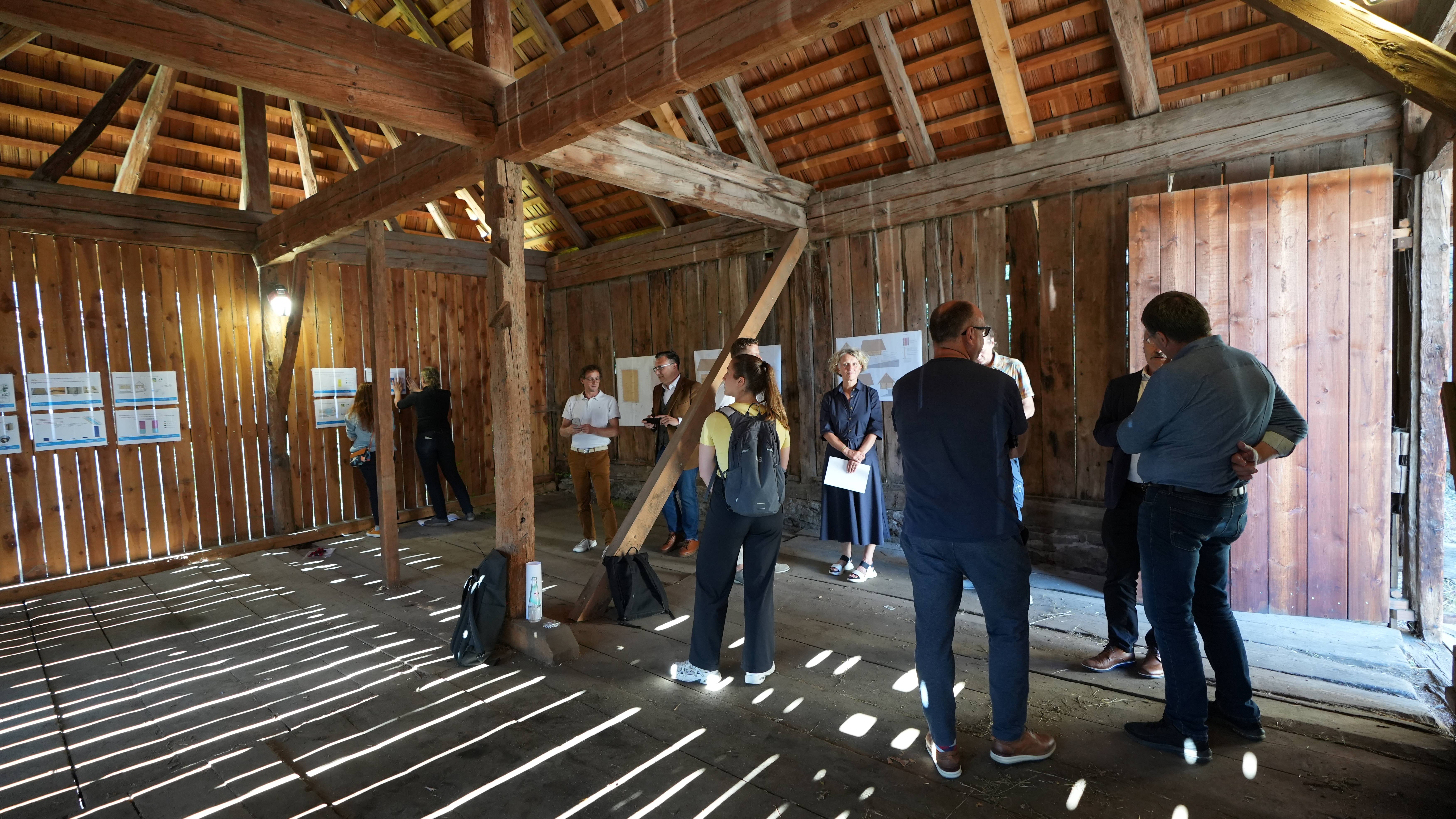
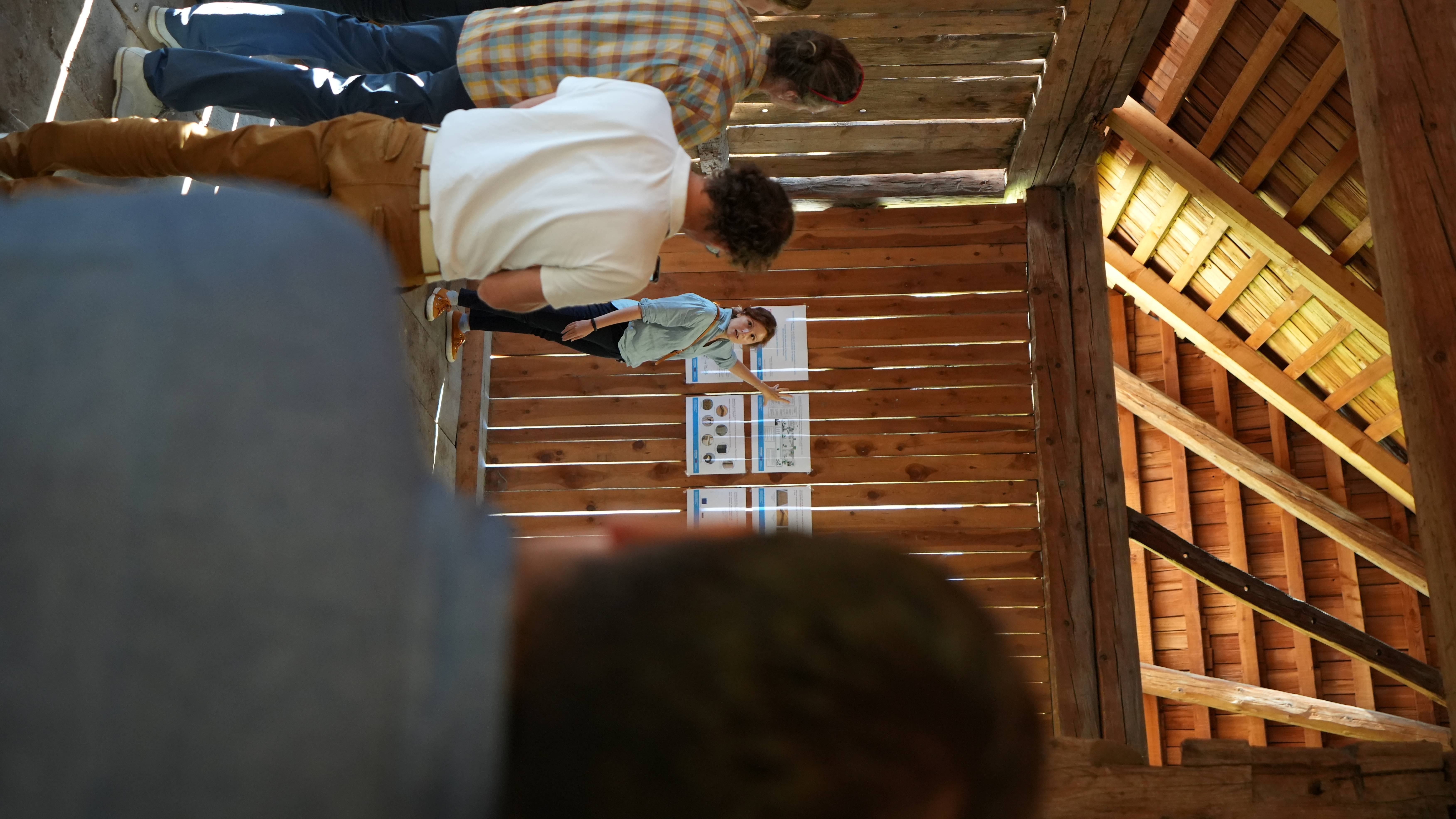
On September 18, the Mesnerstadele in Mölten became a stage for discussions about the future:
How can historic buildings be renovated in a way that not only preserves their history but also meets the demands of a sustainable future? As part of the SUSMAT research project, the Mesnerstadele is currently undergoing a sustainable renovation—a showcase project that demonstrates how innovation, tradition, and responsibility can come together in the construction industry.
A house with a history—and a future
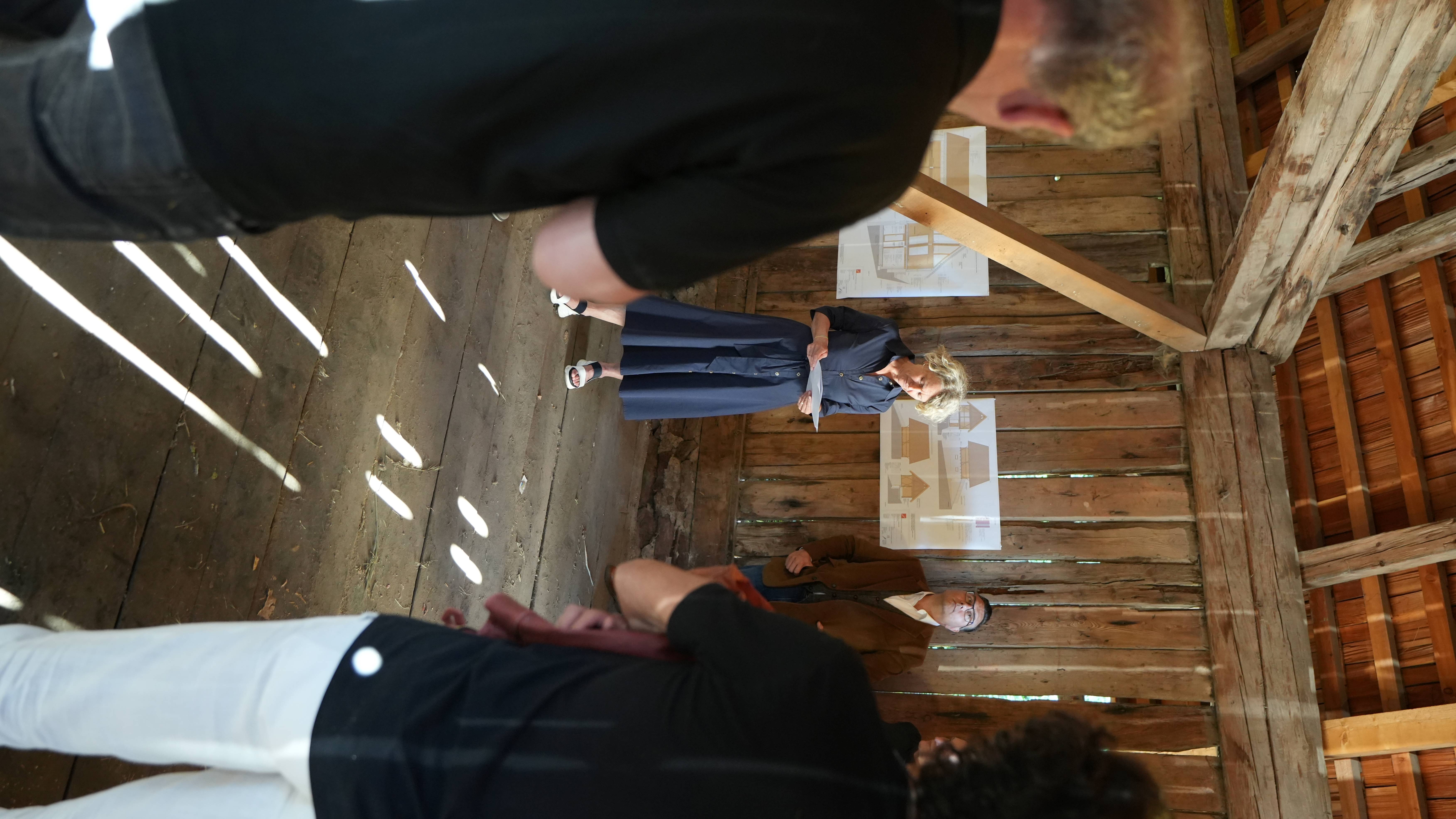
Mayor Walter Gruber opened the event and highlighted the project’s importance to the community. The Mesnerstadele is not only a piece of the village’s history, but also a place where the future of construction comes to life.
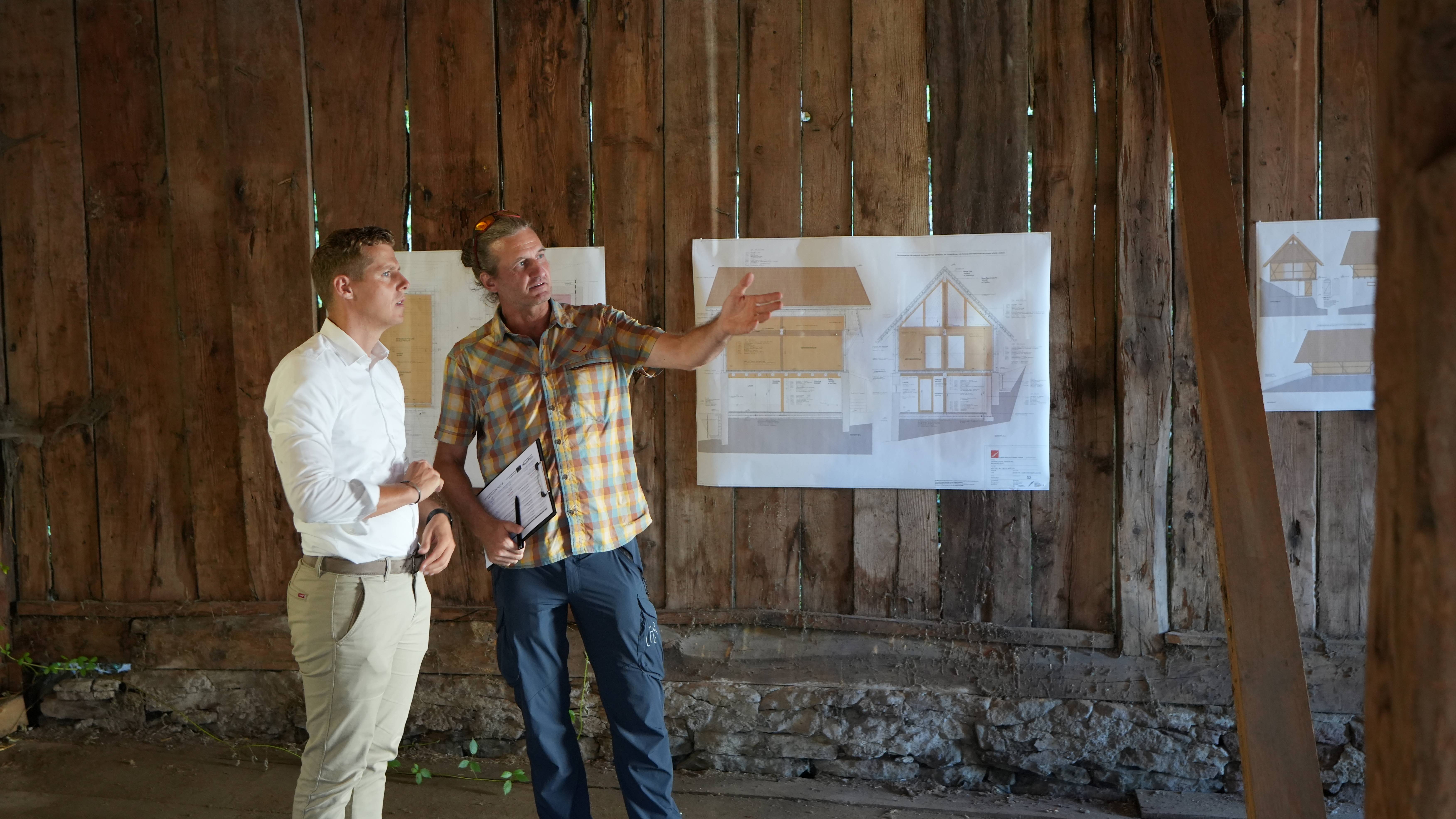
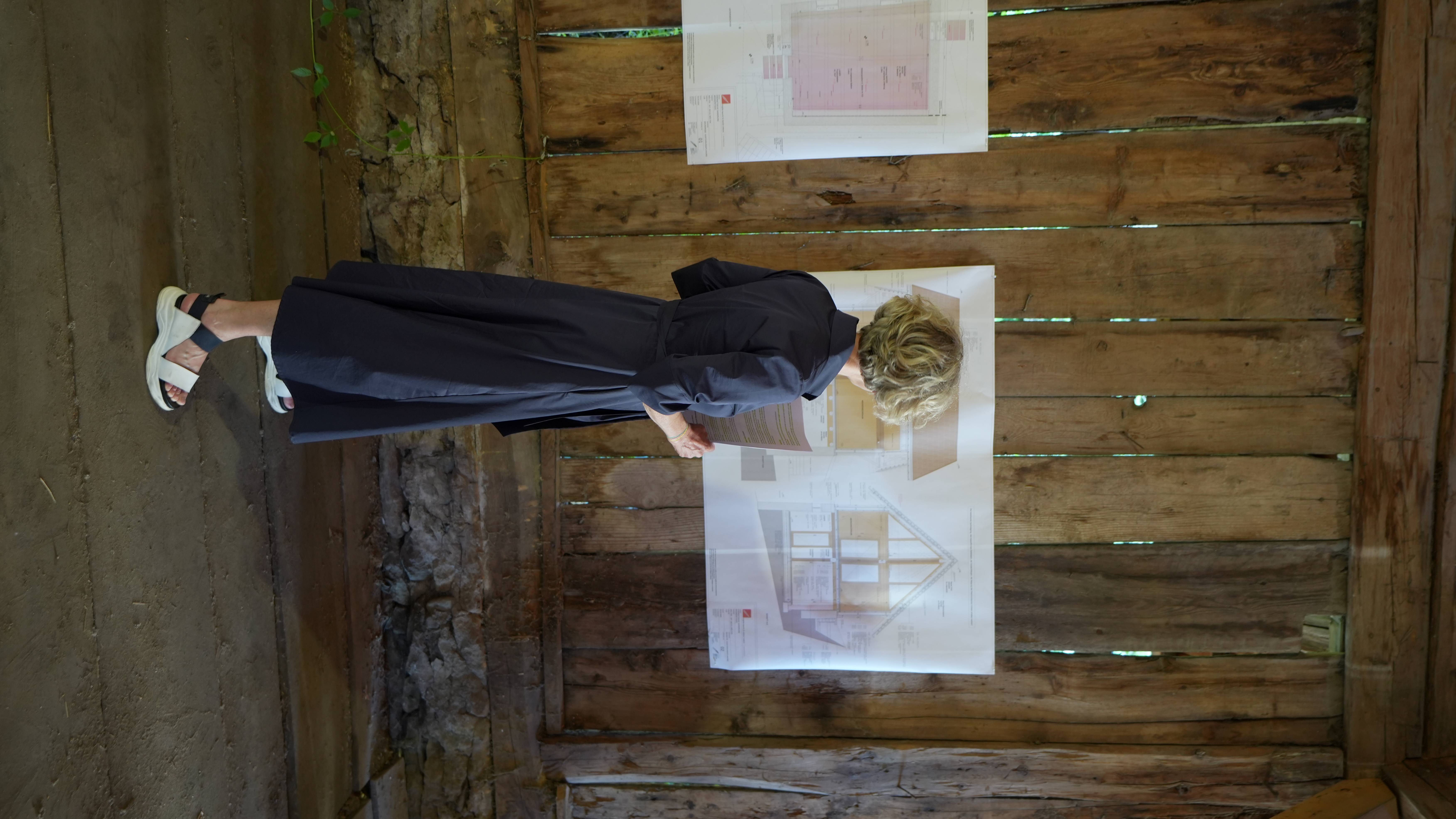
Architect Brigitte Kauntz then gave a tour of the building and presented the planned renovation measures. She spoke about the careful handling of the existing structure, the challenges involved in preserving old materials, and the opportunities presented by new, sustainable solutions.
Sustainability in Practice
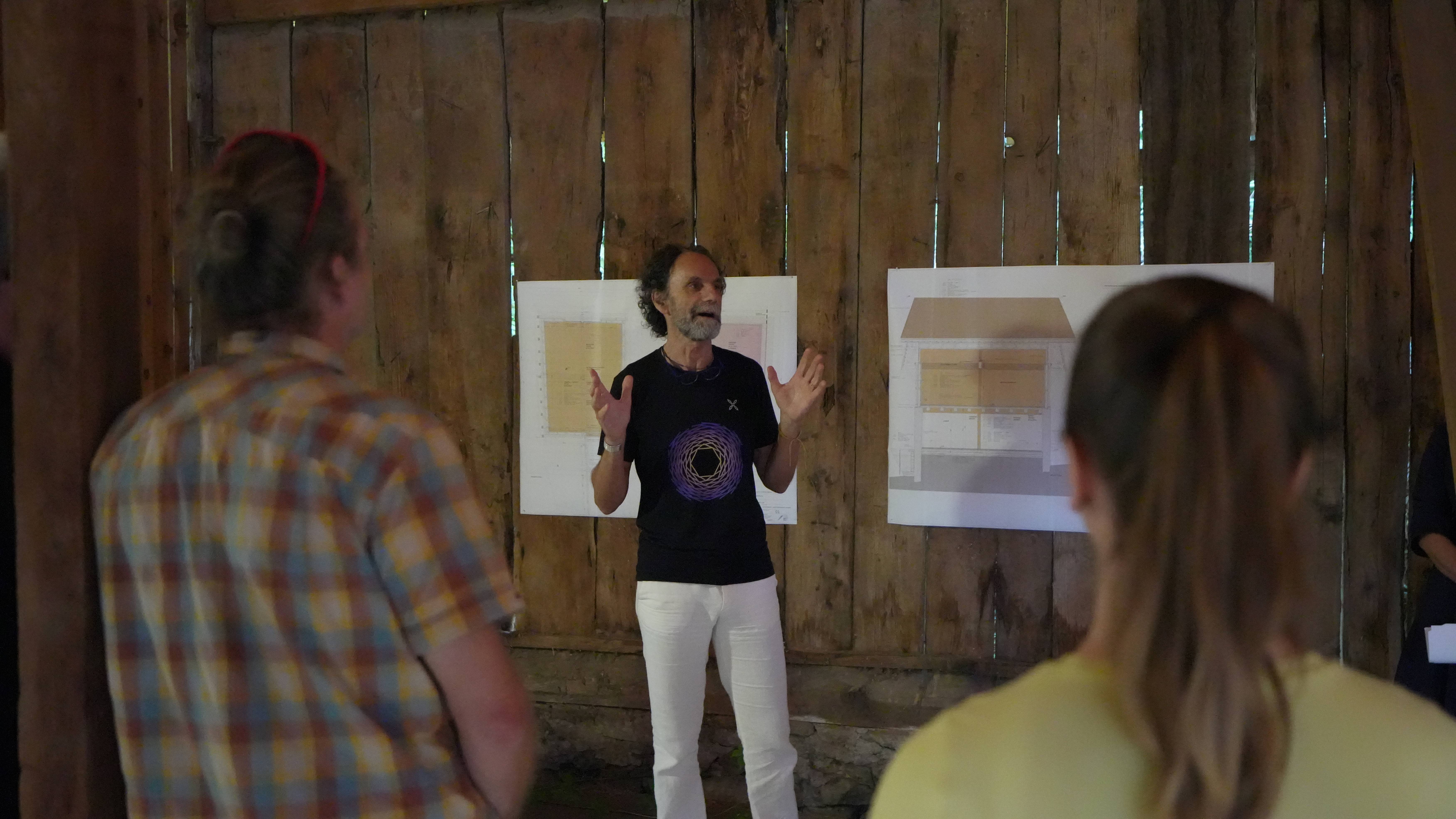
Norbert Dalsass of VIVIUS demonstrated how to turn sustainable renovations from concept into reality—a process that is often complex, especially in the public sector. Between funding requirements, procurement procedures, and technical specifications, it is not always easy to actually implement the best ecological solution. This makes projects like this one all the more important, as they inspire confidence and show that it can be done.
Decisions with a Long-Term Perspective
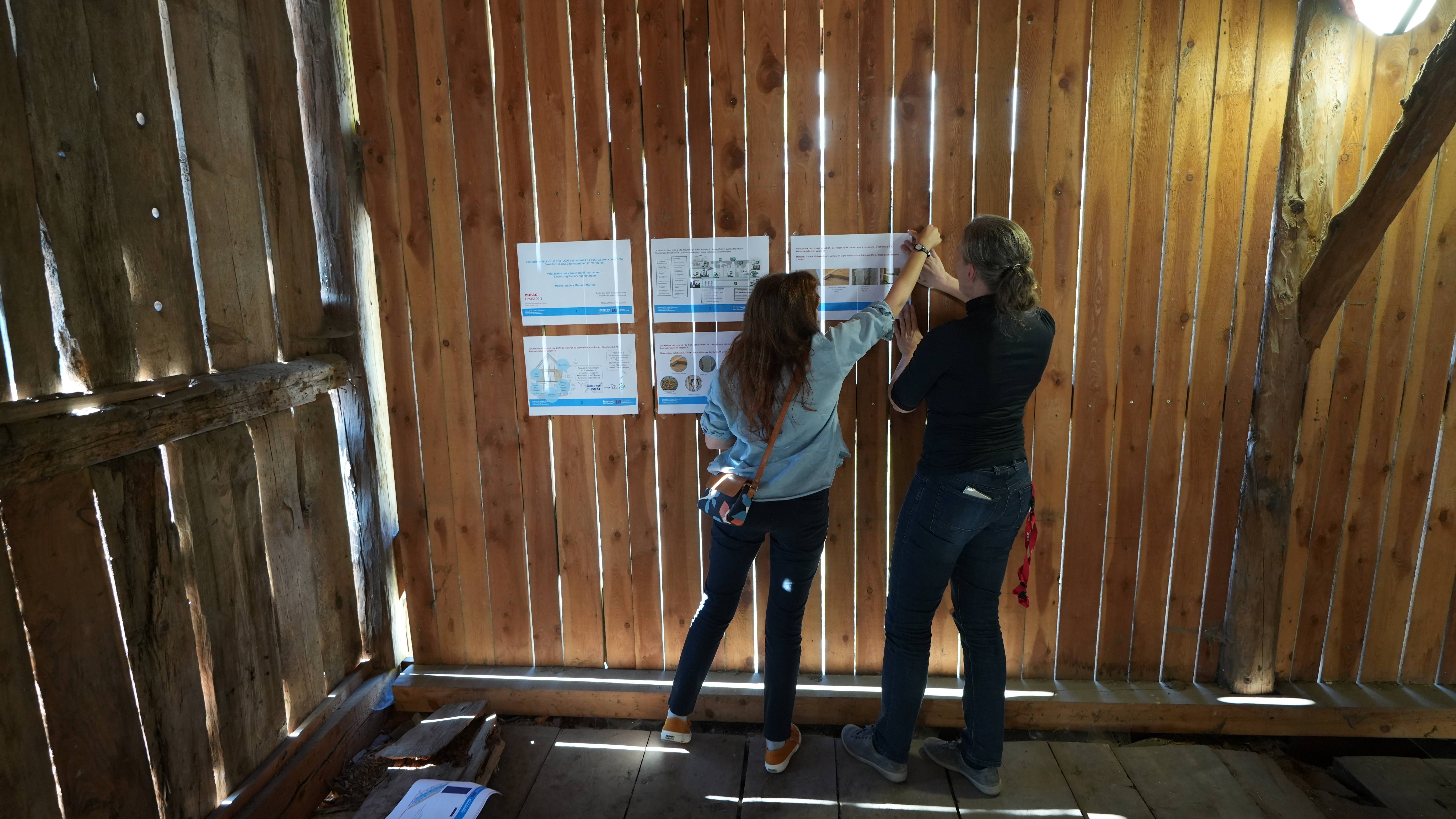
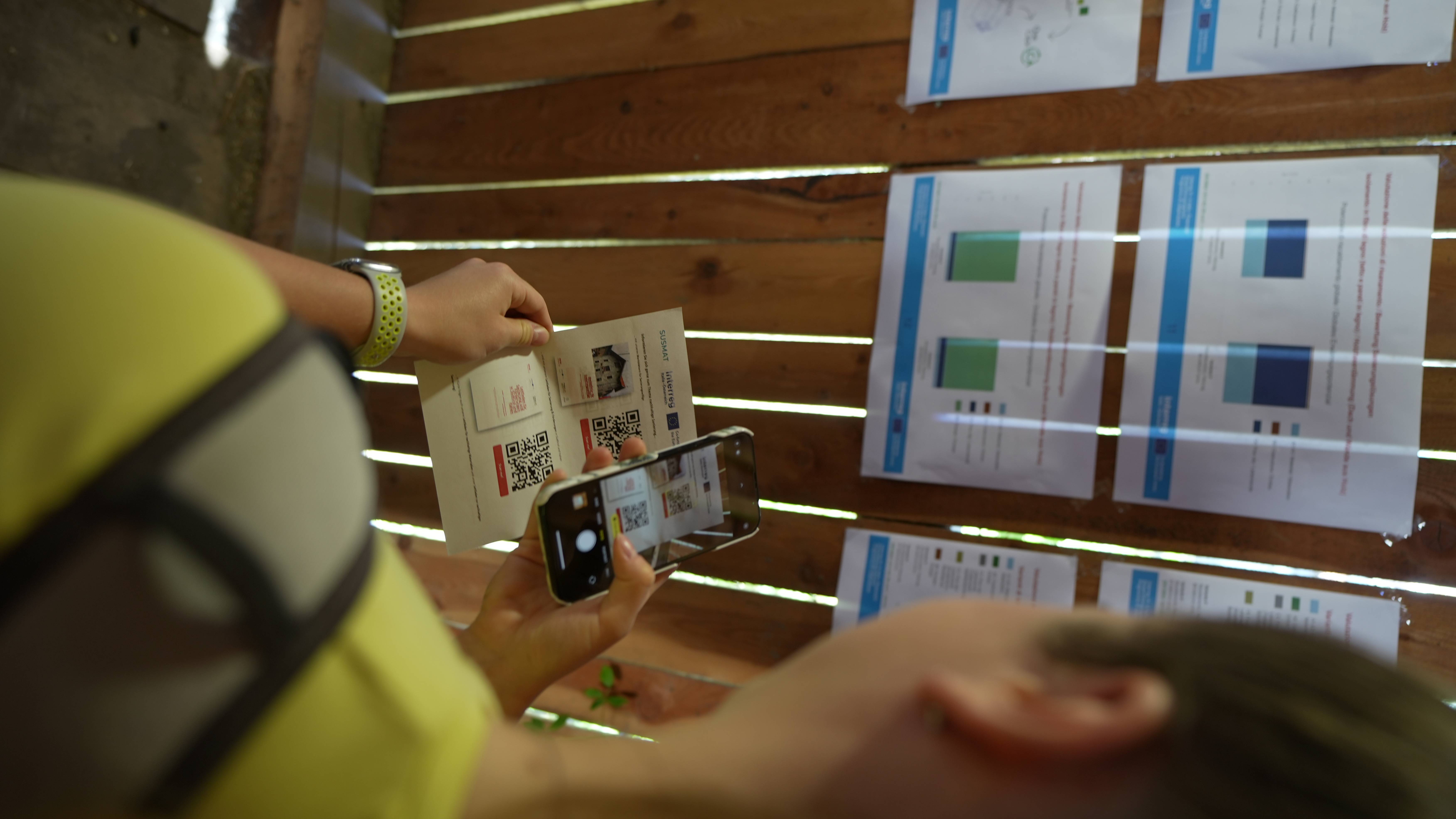
Elena Poma of EURAC presented the results of the life cycle assessment (LCA) conducted as part of the SUSMAT project. The study compared various material options for the renovation in order to identify those that leave the smallest ecological footprint over their entire life cycle. This approach makes sustainability measurable and provides a clear rationale for selecting specific materials.