Awareness Campaign: Price vs. Value
Pfeifer Partners, a planning firm, is the founding company of VIVIUS and a partner for innovative, sustainable construction projects. Innovative building concepts are shaping the future of housing. New technologies and sustainable approaches are revolutionizing the way we design and construct buildings. With a focus on energy efficiency, living comfort, and environmental sustainability, Pfeifer Partners creates homes that meet the highest standards. The idea of working with like-minded individuals on innovative, sustainable solutions became a reality with VIVIUS.

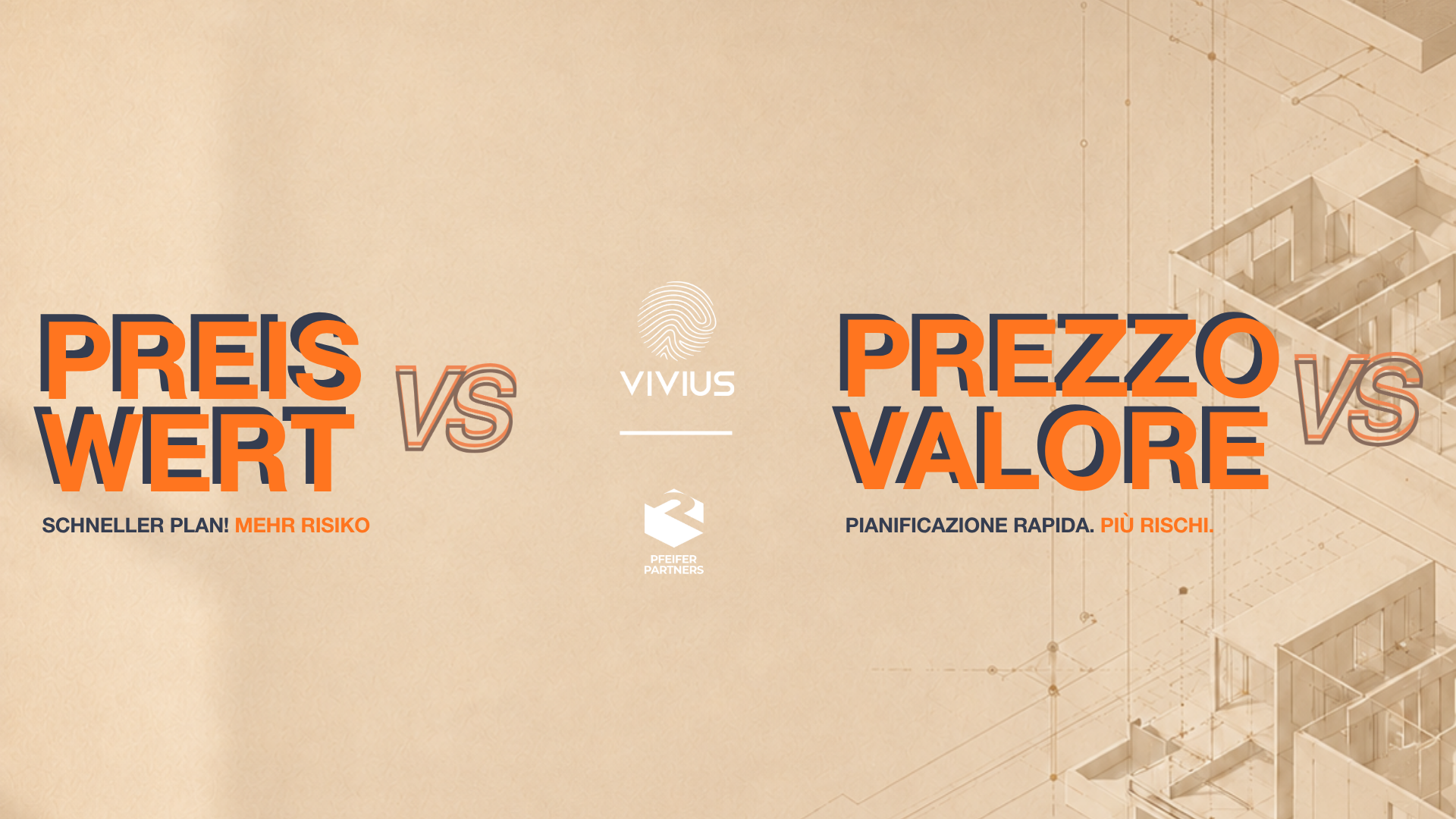

What is cut back on during the planning phase often resurfaces later as a problem on the construction site or during operations. This is because the cost of planning only reflects how much in fees or time is invested today. Its true value only becomes apparent later: in smooth processes, fewer errors, better quality, lower follow-up costs—and in spaces where people truly feel at home.
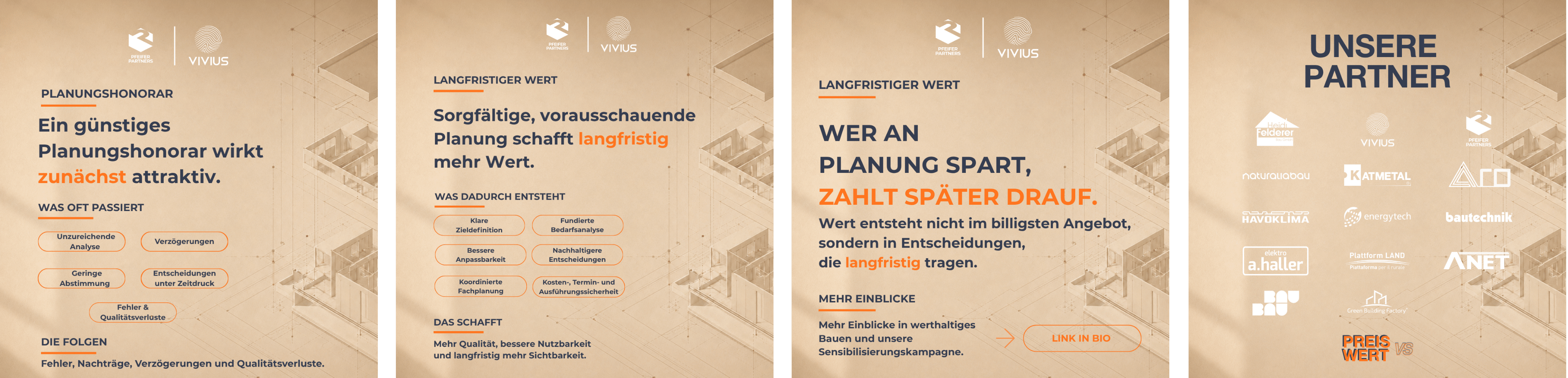
Well-thought-out, forward-looking planning, on the other hand, lays the foundation for a well-functioning whole.
Inexpensive or rushed planning often means: insufficient analysis, too few alternatives, decisions made under time pressure, and inadequate coordination between architecture, structural engineering, and building services.
Often, there is also not enough time to thoroughly address the clients’ wishes, habits, and needs. The consequences are well known: mistakes, change orders, delays, compromises in quality, and unnecessary additional costs—but often also spaces that, while functional, do not really feel harmonious, comfortable, or inviting.
Good planning begins with clear goals and an honest needs assessment; it coordinates all specialist planners effectively and ensures greater cost and schedule certainty. Above all, however, it takes seriously the people who will later live, work, or use these spaces. Only when planners engage deeply with the clients’ wishes and needs can spaces be created that are not only technically and economically sound, but also friendly, comfortable, inviting, and appropriate.
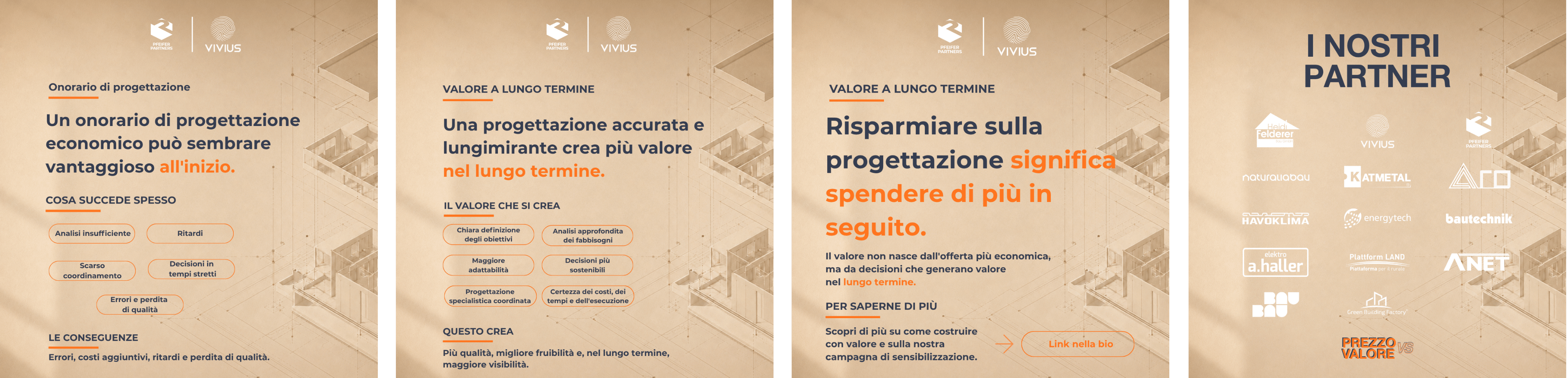
How unique a building should be is not a matter of style, but rather a matter of practicality. Good planning strikes the right balance: between a customized solution and long-term practicality for everyday use, between personal preferences and realistic feasibility. This results in spaces that truly fit people’s lives—and that is precisely where the essential value of good planning lies.
That’s why cutting corners on planning rarely leads to real savings. After all, good planning doesn’t just cost money—above all, it saves you trouble, time, stress, and ongoing expenses. And it creates spaces that work well over the long term and feel just right.
Good planning saves money down the road and creates spaces that suit people's needs.
What’s missing from the planning phase often ends up being costly later on—due to errors, change orders, delays, and unnecessary adjustments. Good planning establishes clear goals, coordinates all parties involved, and ensures better quality, greater cost certainty, and fewer problems during construction and operation. Above all, however, it thoroughly addresses the client’s needs—because only then can spaces be created that not only function well but are also comfortable, welcoming, inviting, and tailored to individual preferences.
Good planning saves money down the road and creates spaces that suit people's needs.
Get exclusive access to the free white paper from the “Price vs. Value” awareness campaign.
It provides a concise summary of all 13 topics, including background information, real-world examples, and valuable insights for making sustainable construction decisions.
Simply enter your email address to download it right away.


