Awareness Campaign: Price vs. Value
Knowledge, experience, and a motivated team. That’s HAVOKLIMA, the company that founded VIVIUS and is convinced that sustainability will be a very important issue in the future. For over 33 years, Havoklima has been serving its customers in Eppan, South Tyrol, and the surrounding area, offering not only comprehensive consulting but also professional installation of heating systems, plumbing systems, solar systems, decentralized ventilation systems, centralized ventilation systems, and central vacuum systems.

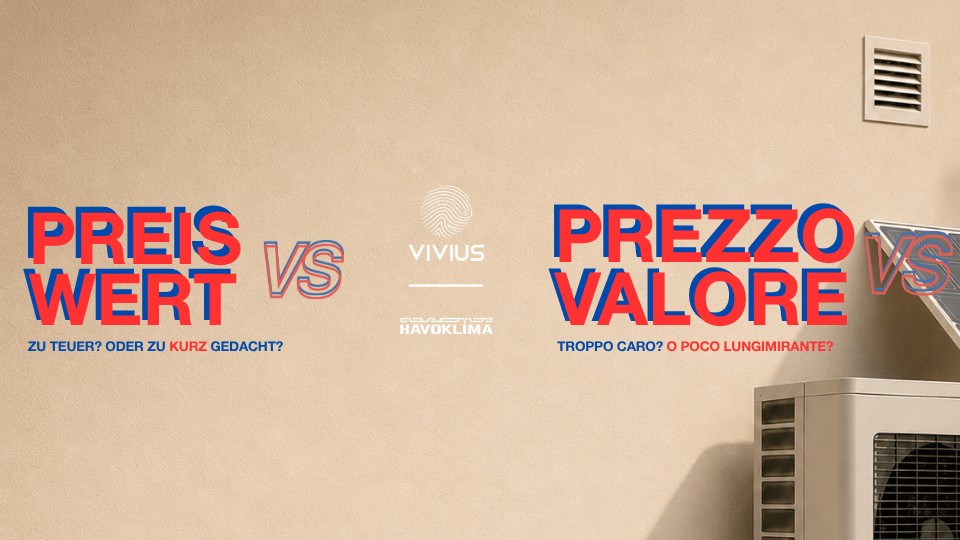

At first glance, renewable energy often seems expensive. The initial investment is higher, the payback period can be longer, and the decision seems more complex than with a conventional system. However, if you focus only on the upfront costs, you’re missing the true value.
After all, the added value of renewable energy becomes apparent over the long term: in lower operating costs, greater security of supply, improved predictability, and, above all, greater independence. On a global scale, this means less dependence on fossil fuels and volatile energy prices. Locally, it also means not being tied exclusively to the price trends of individual utilities or systems. This is precisely where a key advantage lies: buildings gain greater resilience and flexibility.
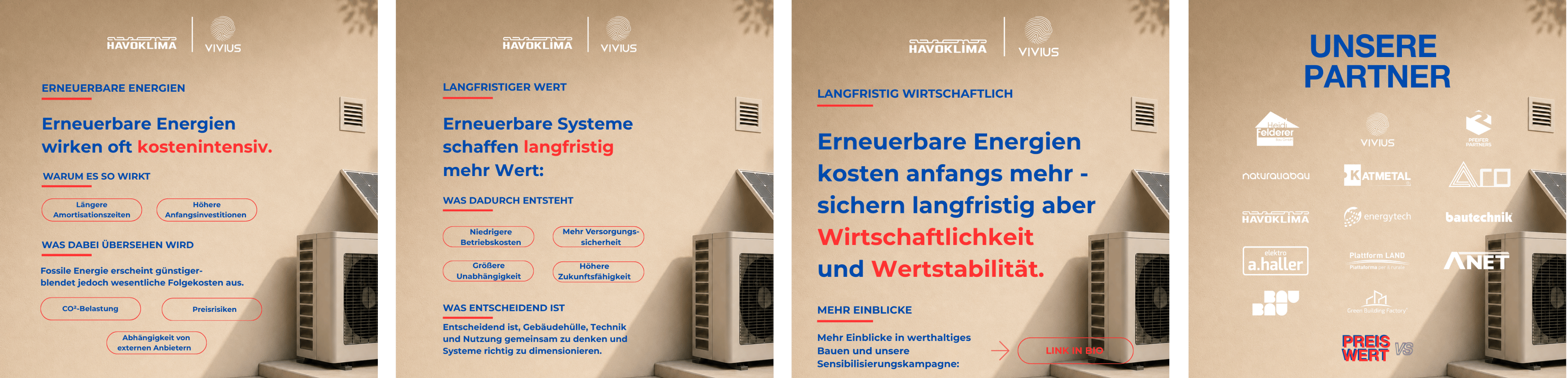
Therefore, true-cost accounting requires taking follow-up costs into account as well.
Fossil fuels often seem cost-effective, but they create ongoing external costs—through CO₂ emissions, price risks, and structural dependencies. Renewable energy systems reduce these risks and make buildings more resilient to increasing demands, new standards, and regulatory changes.
What matters most is not the individual measure, but the interaction of the entire system. Renewable energy sources are most effective when the building envelope, technology, and building use are considered together. The key is not to use as much technology as possible, but to ensure proper sizing and the right solution for the specific building.
This results in buildings that are not only efficient but also retain their value over the long term, are adaptable, and are future-proof.
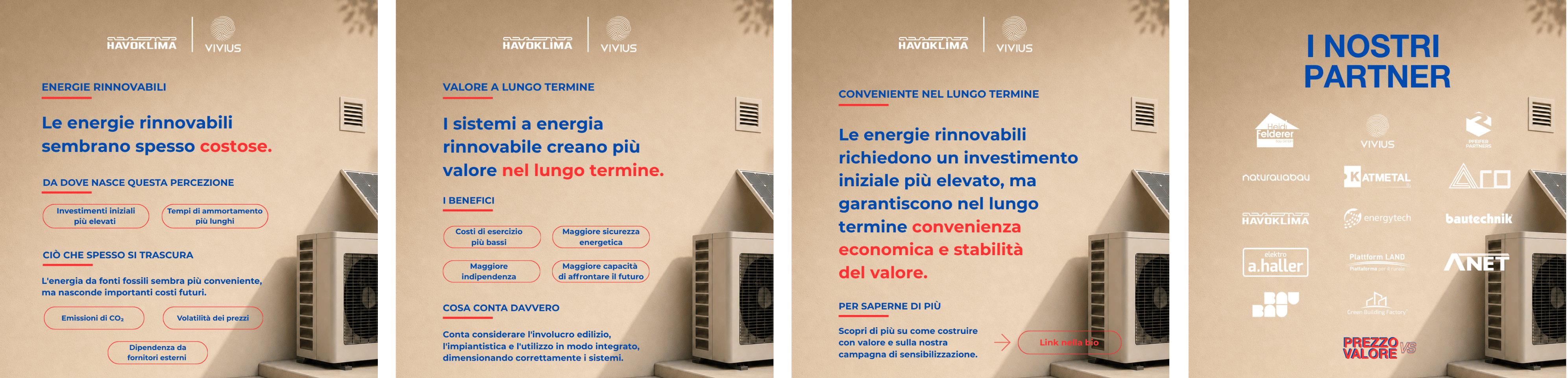
What costs more today may be exactly what ensures what becomes particularly valuable in times of growing uncertainty: stability, independence, and reliability.
Fossil fuel systems often seem more cost-effective, but they create dependencies and ongoing follow-up costs. Renewable energy requires a higher initial investment but, in the long run, reduces operating costs and increases the security of supply. Its true value, however, also lies in the independence it provides: from fossil fuels, from international energy prices, and from the local pricing structures of individual utilities. Those who invest wisely today not only protect the climate but also safeguard the value and flexibility of their building.
Every investment in renewable energy is an investment in less dependence and a brighter future.
Renewable energy sources cost more initially—but in the long run, they provide independence, stability, and security for the future.
Get exclusive access to the free white paper from the “Price vs. Value” awareness campaign.
It provides a concise summary of all 13 topics, including background information, real-world examples, and valuable insights for making sustainable construction decisions.
Simply enter your email address to download it right away.


