Awareness Campaign: Price vs. Value
Elektro A. Haller is a founding member of VIVIUS because the idea and the community behind it were so compelling. Sustainability is playing an increasingly important role in day-to-day business operations—so it was a natural step to become part of a network that focuses precisely on this topic. For over 50 years, Elektro A. Haller has been a specialist in electrical installations and a go-to partner for building technology, photovoltaics, IoT, network technology, electric mobility, and much more.

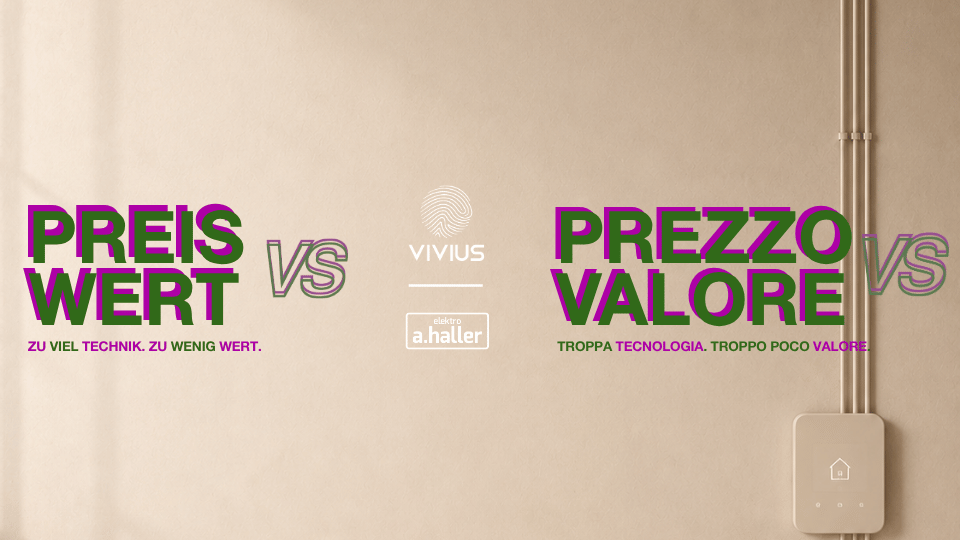

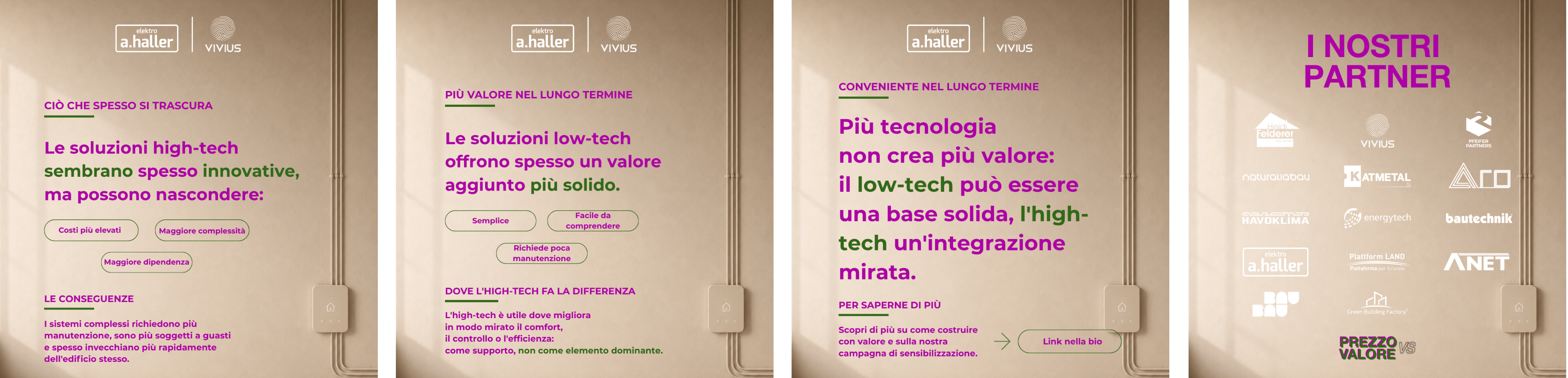
When it comes to building services, the rule of thumb often seems to be: the more technical, the better. But greater complexity does not automatically mean higher quality. High-tech systems may seem advanced, but they are often more expensive, require more maintenance, and are more dependent on software, updates, and specialized service. This is precisely where the contradiction lies: buildings are designed to last for decades, while technical systems age much more quickly.
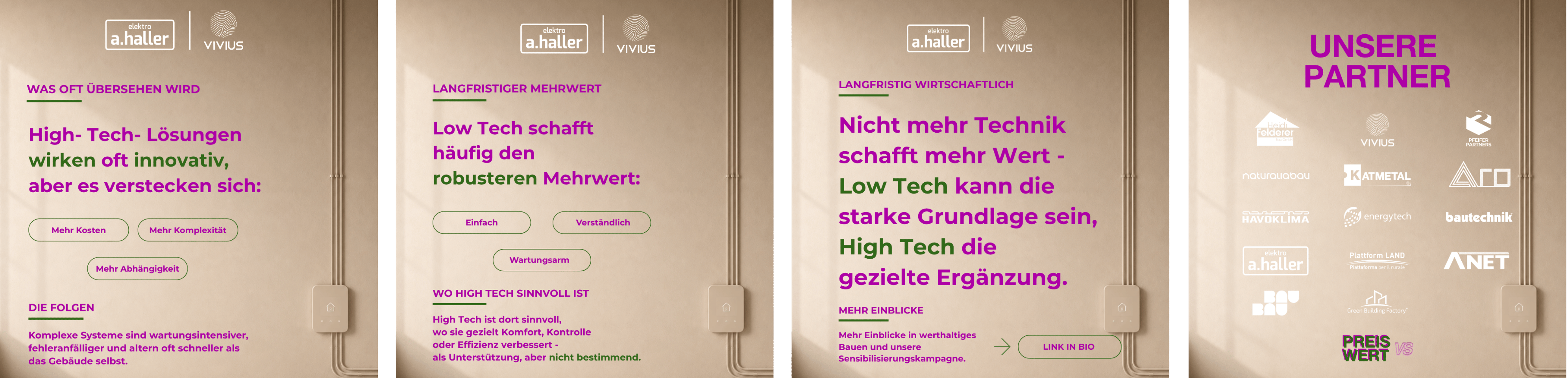
Low-tech focuses on simple, robust, and easy-to-understand solutions. Such systems are typically low-maintenance, less prone to errors, and reliable in everyday use. They follow the principle of sufficiency: only what is actually needed and creates recognizable added value is used.
High-tech solutions can be useful when they specifically improve comfort, control, or efficiency. The key is that technology remains a support tool and does not become an end in itself. It is not the amount of technology that makes a building better, but rather its appropriateness, durability, and the quality of its integration.
In building services engineering in particular, the importance of the difference between price and value becomes especially clear. Whether it’s biomass boilers, heat pumps, ventilation systems, or system components such as storage systems, hot water supply, pressure-maintaining systems, or circulation pumps: it is not individual units alone that determine quality, but rather the interaction of the entire system. High-quality, durable components, energy efficiency, the manufacturers’ experience, and a reliable customer service network are just as crucial as technically sound planning.
After all, high-quality individual devices are not enough if they are not optimally coordinated with one another. Only professional expertise and careful system planning can turn technology into a solution that works effectively over the long term.
Those who build for the future therefore rely on the right technology of the right quality—robust, user-friendly, durable, and suited to the building and the needs of its users.
Complex building systems often seem cutting-edge, but they frequently result in higher costs, more maintenance, and greater dependencies. What matters is not the most advanced technology, but the right technology: robust, easy to understand, durable, and well-coordinated. Low-tech solutions can serve as a strong foundation, while high-tech solutions can provide targeted enhancements—where they create real added value. The best technology isn’t the most elaborate—it’s the one that works effectively in the long run.
Not as much technology as possible, but as much as is practical, high-quality, and durable.
Get exclusive access to the free white paper from the “Price vs. Value” awareness campaign.
It provides a concise summary of all 13 topics, including background information, real-world examples, and valuable insights for making sustainable construction decisions.
Simply enter your email address to download it right away.


