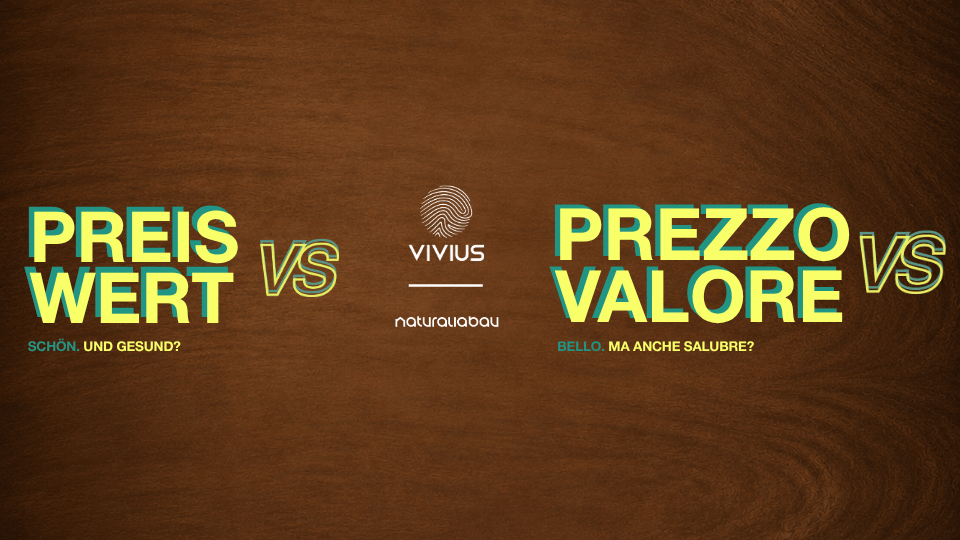
Awareness Campaign: Price vs. Value
For more than 30 years, Naturalia-Bau has exclusively sold high-quality natural building materials. Naturalia-Bau is the go-to partner for healthy building materials, offering products and solutions made from renewable raw materials along with a comprehensive range of services for designers, tradespeople, and homeowners. Naturalia-Bau’s approach is not to offer individual products, but rather coordinated solutions for roofs, walls, floors, and interior finishes, in order to optimally combine thermal insulation, moisture regulation, sound insulation, and healthy living.

Materials shape the way a space looks and, in particular, the way it feels—and what it means for people and the environment in the long term.
The price of a material is listed on the invoice. Its value becomes apparent in the space, in everyday life, and over many years. A low price does not make a material valuable. What matters is how it affects indoor climate, health, and the environment—and how long it retains its quality.
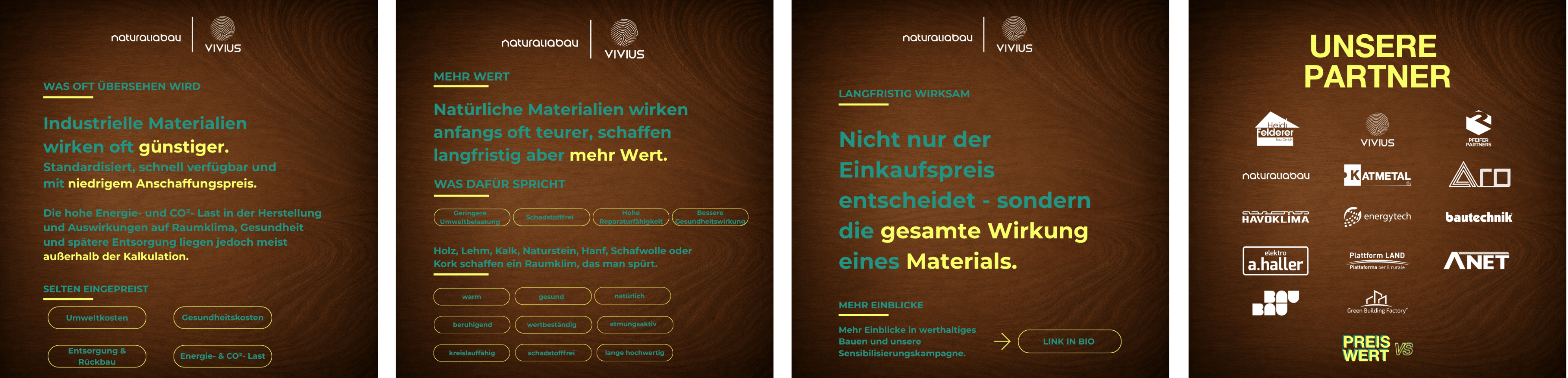
Natural materials often cost more up front, but they pay off in the long run through living comfort, durability, and a healthy environment. It’s not just the price that matters, but the impact over the years.
Industrial materials often seem like a more cost-effective option: they are standardized, readily available, and supposedly cheaper to purchase. What is easily overlooked, however, is the often high energy consumption and CO₂ emissions associated with their production, as well as their potential impact on indoor air quality, health, and eventual disposal.
At first glance, natural materials often seem more expensive. They sometimes require more careful craftsmanship and more thoughtful planning. In return, they offer value that far exceeds their purchase price: They are usually renewable, store CO₂, are durable, can be repaired, and are free of harmful substances.
At the same time, they help create an indoor environment that you can really feel—warm, calm, breathable, natural, and soothing.
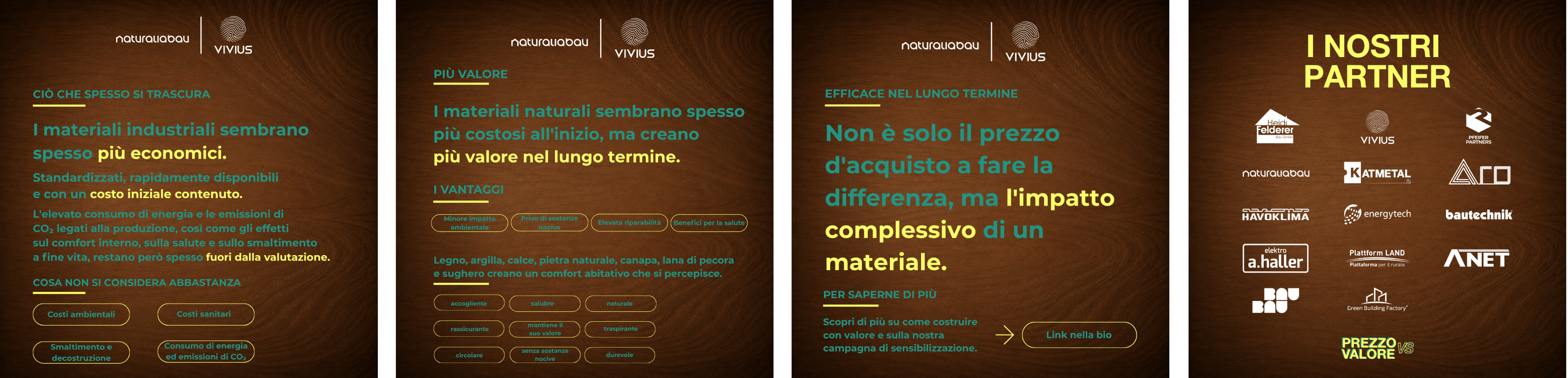
Wood, clay, lime, natural stone, hemp, straw, bamboo, flax, jute, cellulose, sheep’s wool, or cork create spaces that not only look high-quality but also remain healthy and retain their value over the long term. This is precisely where the true cost lies: environmental and health costs are rarely factored into the price of materials, nor are the differences in demolition and reuse. Those who focus solely on the purchase price therefore often fail to see the true value.
Natural building materials combine sustainability with high performance. Renewable raw materials store CO₂, produce low emissions, and are free of substances harmful to health. At the same time, they provide excellent thermal insulation, improve soundproofing, regulate humidity, and create a pleasant indoor climate through healthy, vapor-permeable surfaces.
Natural materials are used in construction for roof structures, exterior and interior walls, ceilings, and floor systems, as well as for surface finishes—for example, as structural elements, insulation, plaster, screed, or flooring.
Thanks to modern planning and construction methods, organic materials can now be combined with innovative technologies to create buildings that are durable, energy-efficient, and sustainable.
Natural building materials prove their worth over decades.
Get exclusive access to the free white paper from the “Price vs. Value” awareness campaign.
It provides a concise summary of all 13 topics, including background information, real-world examples, and valuable insights for making sustainable construction decisions.
Simply enter your email address to download it right away.